Local SEO for Contractors: How to Rank on Google Maps in Your Service Area
Local SEO for contractors: Google Business Profile setup for service-area businesses, service + city pages, reviews, citations and a GeoGrid to see where you rank.
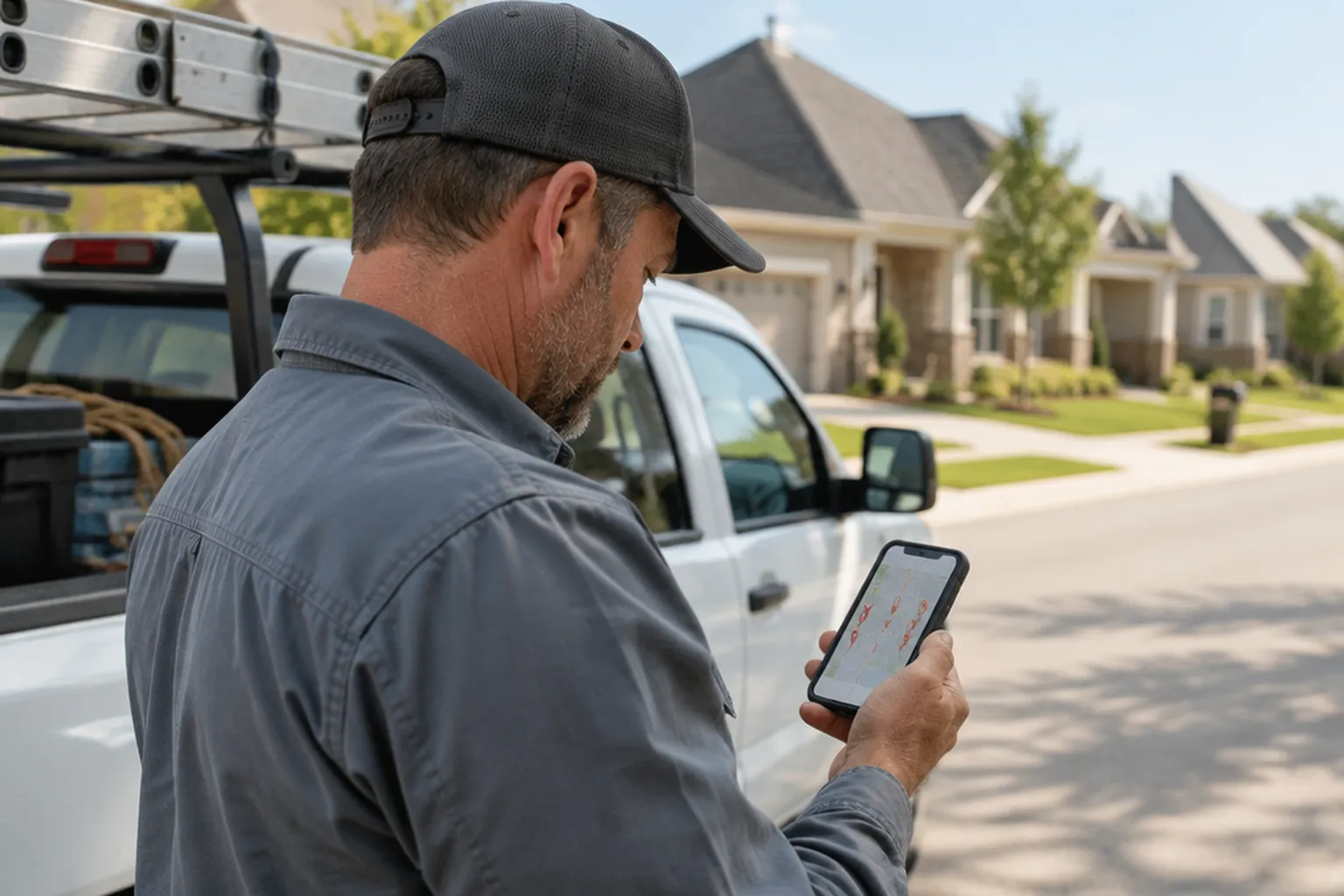
A homeowner’s water heater fails on a Sunday night. They grab their phone, type “plumber near me”, and call one of the first three businesses on the map. If you’re not one of them, the job goes to someone else, whatever your reputation. Local SEO for contractors is about getting into those three spots, in every neighborhood you want to work in, not just the one around your shop.
In short: local SEO for contractors comes down to five things: a Google Business Profile set up as a service-area business with the right primary category, a website with one page per service and per main city, a steady flow of reviews that mention the job and the location, consistent listings on the directories homeowners use, and tracking to see which neighborhoods and searches bring calls. A GeoGrid shows where you rank across your service area.
Key takeaways
- Google ranks you differently in each neighborhood: you can be #1 near your shop and invisible 5 miles away.
- Your primary category on Google is the single most important setting. Pick your main trade, not a generic one.
- One page per service, and per main city, gives Google a reason to show you outside your immediate area.
- Reviews that mention the job and the city help both your rating and your relevance.
If you’re new to the topic, our guide on what local SEO is covers the basics. This article focuses on what’s specific to contractors: service areas, trades and job sites. It’s the method we use in our local SEO services.
How strong is your local SEO?
Six questions about your online presence. Answer “yes” when the statement is true.
-
Question 1 of 6
Your Google Business Profile’s primary category is your main trade (Roofing contractor, Plumber, Electrician…).
-
Question 2 of 6
Your profile lists the cities or ZIP codes you serve.
-
Question 3 of 6
Your website has a separate page for each main service.
-
Question 4 of 6
You got at least one new Google review in the last two weeks.
-
Question 5 of 6
Your business name, phone and website are the same on Yelp, Angi, BBB and Facebook.
-
Question 6 of 6
You know how many calls your Google profile brought last month.
Why contractors rank differently from other businesses
A restaurant has customers come to it. A contractor goes to the customer. That changes how local SEO works:
You’re a service-area business
You can hide your address and list the areas you serve. But Google still uses your verified location as the center of gravity for your rankings.
Searches are by trade and city
“Roofer near me”, “emergency plumber Dallas”, “electrician Plano”. Each trade and each city is a separate race with separate competitors.
The goal is the call
Most homeowners call or request a quote straight from the map. What counts is calls and form leads, not website visits.
The searches homeowners use, by trade
Every trade has its own searches, and its own competitors on each one. Build your profile and your pages around the searches homeowners actually type:
| Trade | Typical homeowner searches | Primary category on Google |
|---|---|---|
| Plumbing | plumber near me, emergency plumber [city], water heater repair [city] | Plumber |
| Roofing | roofer near me, roof repair [city], roof replacement [city] | Roofing contractor |
| Electrical | electrician near me, panel upgrade [city], EV charger installation [city] | Electrician |
| HVAC | AC repair near me, furnace repair [city], HVAC company [city] | HVAC contractor |
| Remodeling | kitchen remodel [city], bathroom remodel near me | Remodeler / Kitchen remodeler |
| Painting | house painters near me, exterior painting [city] | Painter |
Searches given as typical examples: check the exact wording and volumes for your trade and cities with a keyword tool.
Local SEO for contractors in 6 steps
-
Step 1
Set up your Google Business Profile as a service-area business
Primary category = your main trade, secondary categories for your other services, service area with the cities you want, hours, phone, website, and your services listed with a description.
-
Step 2
Post job photos every week
Before and after shots, your crew, your trucks, real job sites. Fresh photos show Google and homeowners that you’re active. No stock photos.
-
Step 3
Build one page per service, then per main city
Start with your services (roof repair, roof replacement, gutters). Then add pages for your main cities, with jobs done there, local photos and reviews from local customers. No copy-paste between cities.
-
Step 4
Ask for a review after every job
Send the link by text the day the job is done. Invite the customer to say what you did and where: “roof replacement in Plano” helps your relevance for that search.
-
Step 5
Clean up your directory listings
Yelp, Angi, BBB, Houzz, Nextdoor, Facebook, your local chamber of commerce: same business name, same phone, same website everywhere.
-
Step 6
Track calls and rankings by area
Call tracking and form tracking on your website, your profile’s Performance report, and a GeoGrid each month on your two or three main searches.
Watch out
Don’t create fake addresses or virtual offices to rank in other cities, and don’t stuff city names into your business name. Google suspends profiles for both, and getting reinstated can take weeks of lost calls.
See where you really rank with a GeoGrid
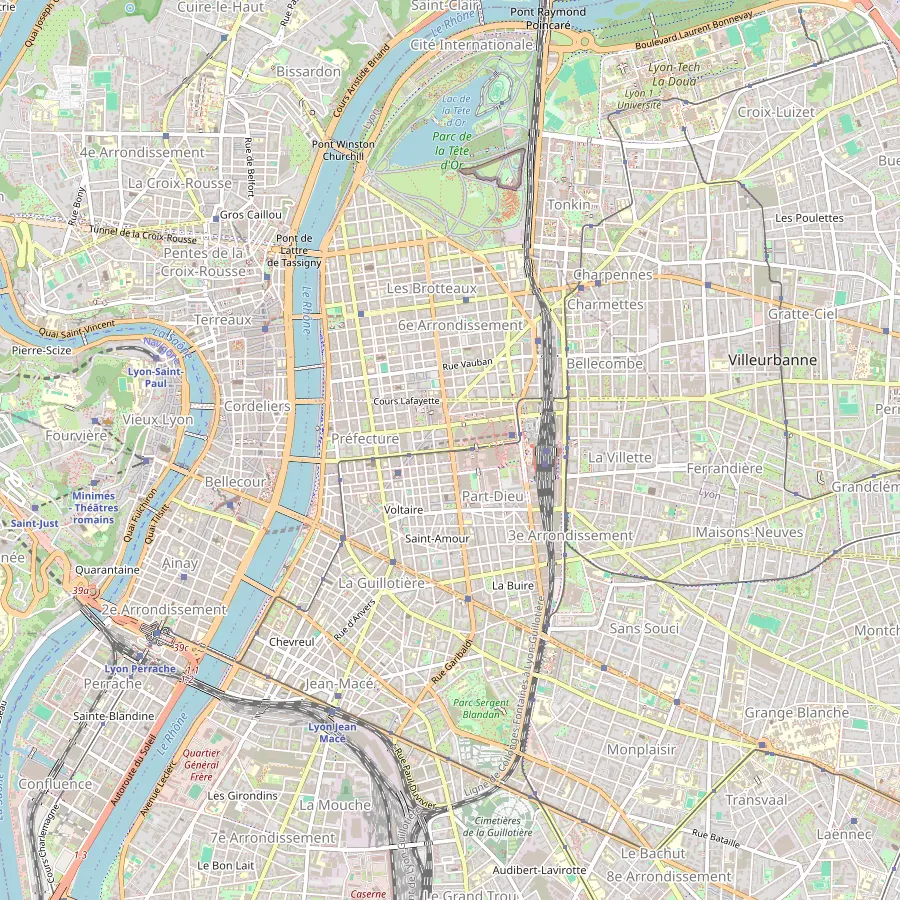
Googling your trade from your office shows you only one spot on the map. A GeoGrid checks your ranking from dozens of points across your service area, so you see exactly where you win and where competitors take your calls:
Local SEO, Local Services Ads or Google Ads?
Relying only on paid leads
- You pay for every call, forever
- Shared leads from platforms, sent to several contractors
- Calls stop the day the budget stops
- Cost per lead rises as competitors bid more
Building local SEO alongside
- Calls from Google Maps with no cost per lead
- Leads that called you, not three of your competitors
- Rankings that keep working month after month
- Ads used to fill gaps, in the areas where you don’t rank yet
Ads and local SEO aren’t rivals. Local Services Ads and Google Ads bring calls from the first week; local SEO lowers your cost per job over time. Our guide to getting construction leads explains how to combine them, and our guide to contractor website design covers the pages that turn visits into quote requests. For every setting on your profile, see our Google Business Profile optimization guide.
The bottom line on local SEO for contractors
Local SEO for contractors isn’t about ranking in one spot: it’s about showing up in the top three across every neighborhood where you want jobs. Get your primary category and service area right, post job photos, build a page per service and per main city, ask for a review after every job, keep your listings consistent, and track calls and rankings by area. Take the quiz above to find your weakest point, then start there.
Frequently asked questions
What is local SEO for contractors?
It's the work that gets a contractor to show up when homeowners search for their trade in their area, like “roofer near me” or “plumber in Tampa”. It covers the Google Business Profile, a website with a page per service and per city, reviews, listings on directories such as Yelp, Angi or the BBB, and tracking calls and form leads.
Can I rank on Google Maps if I work from home?
Yes. Most contractors are service-area businesses: you can hide your home address on your Google Business Profile and list the cities or ZIP codes you serve instead. Google still uses your verified location as a reference point, so you'll usually rank best close to it and need reviews, service pages and city pages to rank farther out.
How long does local SEO take for a contractor?
The first improvements on Google Maps often show up within a few weeks of fixing your profile and reviews. Ranking your website for service + city searches usually takes three to six months, depending on your trade, your market and your competitors.
Is local SEO better than Local Services Ads or Google Ads?
They work together. Local Services Ads and Google Ads bring calls from the first week, but you pay for every lead. Local SEO takes longer to build, then brings calls without a cost per lead. Most contractors start with ads for immediate jobs and invest in local SEO to lower their cost per job over time.
How many reviews does a contractor need to rank?
There's no magic number. What matters is how you compare with the competitors ranking in your area: their review count, their rating and how recent their reviews are. A steady flow of new reviews, mentioning the job and the city, usually beats a big batch collected once.